Niches Bring Riches: Define Your Expertise
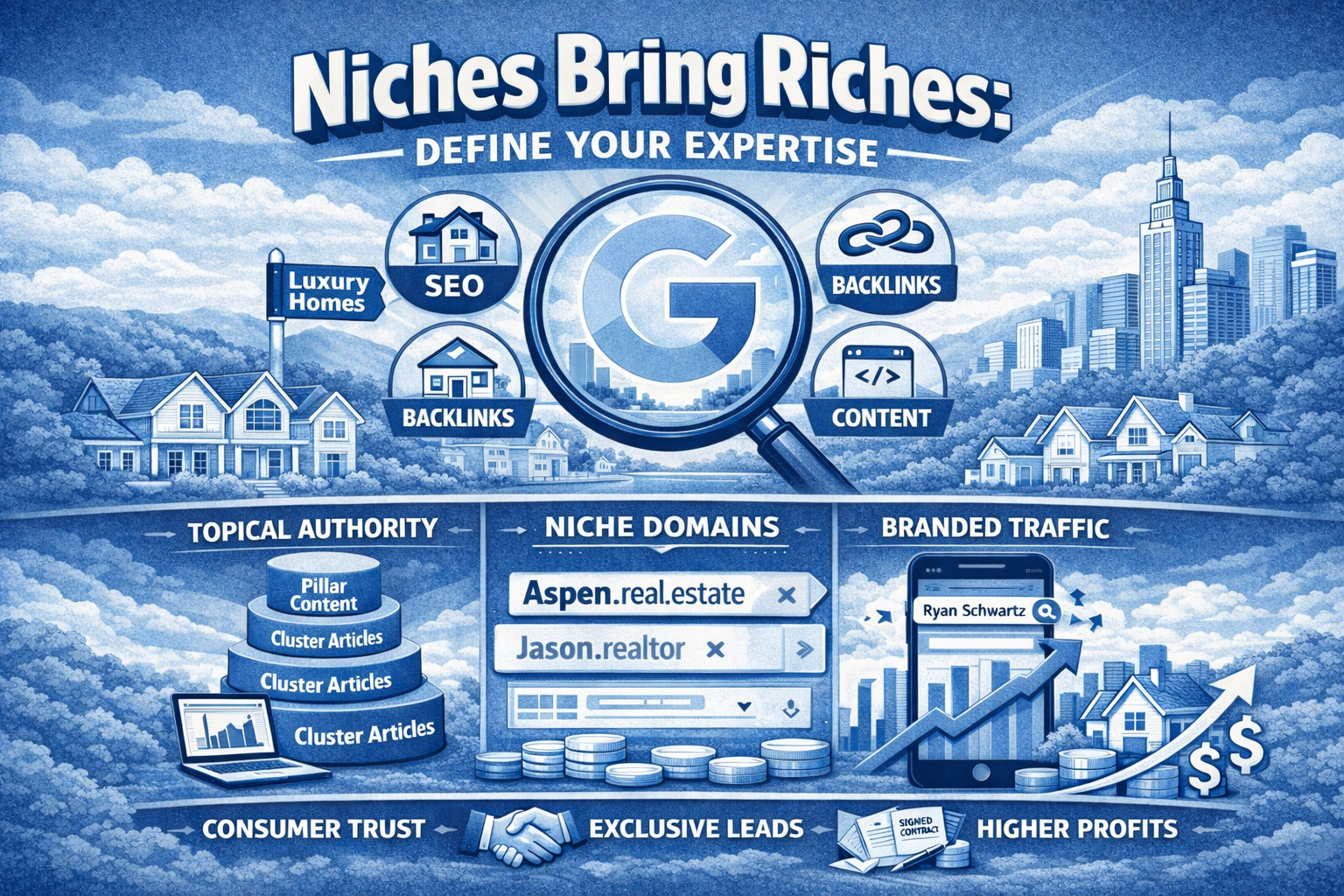
In the competitive world of real estate, standing out is no longer about having the most extensive network or the flashiest business card. It’s about owning a digital space so completely that you become the undeniable expert. The old mantra "niches bring riches" has found its modern battlefield: the Google search results page. For real estate agents, this isn't just a motivational phrase, it's a strategic mandate.
When you specialize, you do more than narrow your focus. You signal to both search engines, and potential clients that your knowledge is deep, not just wide. This article breaks down why a niche strategy is the most powerful tool in an agent's digital marketing arsenal. We'll explore how to build unshakeable topical authority through SEO, how a niche domain can instantly shape perception, and the powerful psychological effect this has on consumer trust and, ultimately, your bottom line.
This post will provide you with a high-level blueprint for transforming your online presence from just another agent website into a powerhouse of credibility. By the end, you'll have a clear understanding of how to leverage SEO and niche positioning to become the go-to authority in your chosen market, turning search rankings into signed contracts.
Why SEO is the Modern Proof of Expertise
Your online presence is your new first impression. Before a client ever meets you, they’ve likely Googled you, your market, or their specific real estate needs. What they find or don't find, shapes their perception of your expertise. SEO is no longer a dark art practiced by marketers; it's the foundational pillar of credibility for modern real estate agents.
Google’s primary goal is to provide its users with the most relevant and authoritative answers to their questions. It rewards certainty. When your digital footprint is scattered across various topics and locations, you send a mixed signal. But when you consistently create in-depth content about a specific niche, you make Google’s job easy. It can confidently categorize you as an expert.
This is where the concept of topical authority comes in. It’s a measure of your website’s perceived expertise in a specific subject area. By building a rich ecosystem of content around your niche, you create a powerful signal to Google that you are the definitive source of information. This ecosystem, known as a content cluster, revolves around a central "pillar" piece of content and is supported by numerous related "cluster" posts that go into more detail on specific subtopics. This structure proves you have comprehensive knowledge.
For example, I’m an agent that specializes in short-term rental (STR) real estate in California and created a landing page for "Buying a Short Term Rentals". The landing page is supported by cluster posts on topics like:
- Navigating STR permit regulations
- A breakdown of DSCR loans for investment properties
- How to price your STR
- How to select a property manager
- And many more.
By creating this web of interconnected, expert content, the site demonstrates a level of knowledge that a generalist simply cannot match. This deep focus allows eventual domination of search rankings for high-intent keywords, making a trusted voice for potential clients.
The Power of Perception: Niche Domains and Consumer Psychology
While content is king, the castle it lives in matters. A niche domain name acts as a powerful psychological shortcut, instantly reinforcing your specialized expertise. Consider an agent focused on the high-end Aspen market. A generic domain might get lost in the noise, but a market-defining domain like Aspen.realestate creates an immediate and irrefutable perception of authority. It doesn't just say you work in Aspen; it implies you are the Aspen market.
This principle holds true across any specialty. An agent focusing on waterfront properties could use a domain like Waterfront.realestate. These domains function as a digital banner, declaring your expertise before a visitor even reads a single word.
This instant branding has a profound psychological effect on potential clients. Here’s how it influences their decision-making process:
- Trust and Credibility: A niche domain paired with high search rankings acts as a powerful form of social proof. In a consumer's mind, if Google ranks you at the top, you must be the best. This perceived endorsement builds an immediate foundation of trust that is difficult for competitors to overcome.
- Perceived Negotiation Power: When you are seen as the undisputed expert, clients assume you have superior market knowledge and, therefore, greater leverage in negotiations. This perception can lead to higher-value listings and a stronger position at the bargaining table.
- Likelihood of Exclusivity: A client looking for a specialist is less likely to shop around. When your online presence convinces them that you are the sole authority in their area of interest, they are more inclined to grant you an exclusive contract. You're not just an option; you're the only logical choice.
When a potential client is weighing their options, and your competitor is a generalist, your dominant search presence and niche-focused branding become the ultimate tiebreaker. It’s tangible, third-party validation of your expertise. You’ve moved beyond simply claiming to be an expert…you’ve proven it.
Strategies for Building SEO Authority
Achieving niche dominance isn’t about luck; it’s about a deliberate, multi-faceted SEO strategy. To build irrefutable topical authority, you need to implement a series of technical and content-based tactics that signal your expertise to search engines.
H-Tags and Content Structure
Search engines use headings (H1, H2, H3, etc.) to understand the structure and hierarchy of your content. Your main title should always be an H1 tag containing your primary keyword. Use H2s for major sections and H3s for sub-points. This not only improves readability for users but also provides a clear roadmap for search engine crawlers, reinforcing the key themes of your content.
Internal Linking
Internal links are the threads that weave your content clusters together. Every time you publish a new blog post, look for opportunities to link to other relevant articles on your site. This practice helps search engines discover your content and understand the relationship between different pieces, strengthening your site’s overall topical authority. It also keeps users on your site longer, reducing bounce rates and signaling to Google that your content is valuable.
Schema Markup
Schema is a type of microdata that you add to your website's code to help search engines understand your content more effectively. For real estate agents, RealEstateAgent and RealEstateListing schema are crucial. This markup can tell Google your name, brokerage, service areas, and even your specific listings. This can result in "rich snippets" in search results like star ratings or property details, making your listings stand out and increasing click-through rates.
Content Velocity
Consistency is key. Publishing high-quality content on a regular schedule, a practice known as maintaining content velocity - signals to Google that your website is an active and reliable source of information. Whether you commit to one post a week or two per month, sticking to a cadence reinforces your authority and keeps your site fresh in the eyes of search engines.
Backlink Strategy
Backlinks are links from other websites to yours, and they act as a vote of confidence in the eyes of Google. A single high-quality backlink from an authoritative site in your niche (like a local tourism board, chamber of commerce, a real estate news publication, or a local business) is more valuable than dozens of low-quality links. Pursue guest posting opportunities, collaborate with local businesses, and create content so valuable that others naturally want to link to it.
Branded Traffic
Branded traffic refers to visitors who arrive at your site by searching for your name or brand directly (e.g., "Ryan Schwartz Aspen real estate"). This is a powerful signal of authority. You can increase branded traffic by promoting your website and content across social media, in your email newsletter, and during in-person networking. As more people search for you by name, Google recognizes your brand as a legitimate and trusted entity.
Your Roadmap to Niche Domination
Becoming the go-to expert in your real estate niche is an achievable goal. It requires a strategic commitment to building a powerful digital presence grounded in SEO and specialized content. Here are eight practical steps you can implement today to start building your topical authority.
8 Actionable Steps for Agents
- Define Your Niche: Choose a specific lens for your expertise. This could be a geographic area (e.g., a single neighborhood), a property type (e.g., historic homes), or a client segment (e.g., first-time homebuyers, STR investors). Be specific.
- Validate Keyword Demand: Use SEO tools like Ahrefs or SEMrush to research the search volume and competition for keywords related to your chosen niche. Ensure there is enough interest to sustain a content strategy.
- Publish a Cornerstone Post: Write one comprehensive, deeply researched article (1,200 – 2,000 words) that serves as the central pillar of your content cluster. This piece should aim to be the best resource on the internet for its topic.
- Implement Real Estate Schema: Add RealEstateAgent and other relevant schema markup to your website to give search engines structured information about your expertise and services.
- Build Your Content Cluster: Start writing supporting blog posts that dive deeper into subtopics related to your cornerstone content. As you publish, strategically link them back to the pillar post and to each other.
- Secure Authoritative Backlinks: Identify at least three relevant, high-authority websites in your niche (e.g., local news outlets, industry publications, or complementary businesses) and develop a strategy to earn a backlink or mention from them.
- Maintain Content Cadence: Commit to a consistent publishing schedule, whether it's weekly or bi-weekly. This signals to Google that you are a reliable source of fresh information.
- Drive Branded Search: Promote your expertise and your website across all your marketing channels, especially social media. Encourage people to find you by searching your name and niche (e.g., "Jane Doe Austin condos").
Blog Cluster Ideas to Get You Started
- For Luxury Seasonal Markets (e.g., Aspen):
- Pillar Post: What is Billionaire Mountain?
- Cluster Ideas: Where Does Jeff Bezos Live in Aspen?, Is Aspen For the Wealthy?, and Red Mountain Sets the Standard for Aspen Luxury.
- For Local Markets (e.g., Austin):
- Pillar Post: Moving to Austin: A Complete Neighborhood Guide
- Cluster Ideas: The Top 5 Family-Friendly Neighborhoods in Austin; A Food Lover’s Guide to East Austin; Understanding Austin’s Property Tax Rates.
- For STR Investor Niches (e.g., California):
- Pillar Post: Investing in California Short-Term Rentals: A 2026 Guide
- Cluster Ideas: Comparing STR Permit Tiers in Major California Cities; How to Secure DSCR Financing for Your Next Investment; Amenities That Maximize Rental Income in the California Market.
Become the Expert in Your Niche
In real estate, expertise is your most valuable asset. By strategically choosing a niche and building a powerful digital presence around it, you can create irrefutable proof of your authority. This isn't just about playing the SEO game; it's about shaping perception, building trust, and making yourself the only logical choice for your ideal clients.
The journey starts now. Take the first step toward establishing your expert position by exploring the tools that can bring your vision to life. Visit NAR's Domain Name Store to discover exclusive pricing on .realestate and .realtor domain names and website options. Secure your niche domain today and begin building the digital foundation that will show the world you are the definitive expert in your market.
Discover the Best Blogs
Explore our collection of informative and engaging blog posts.